
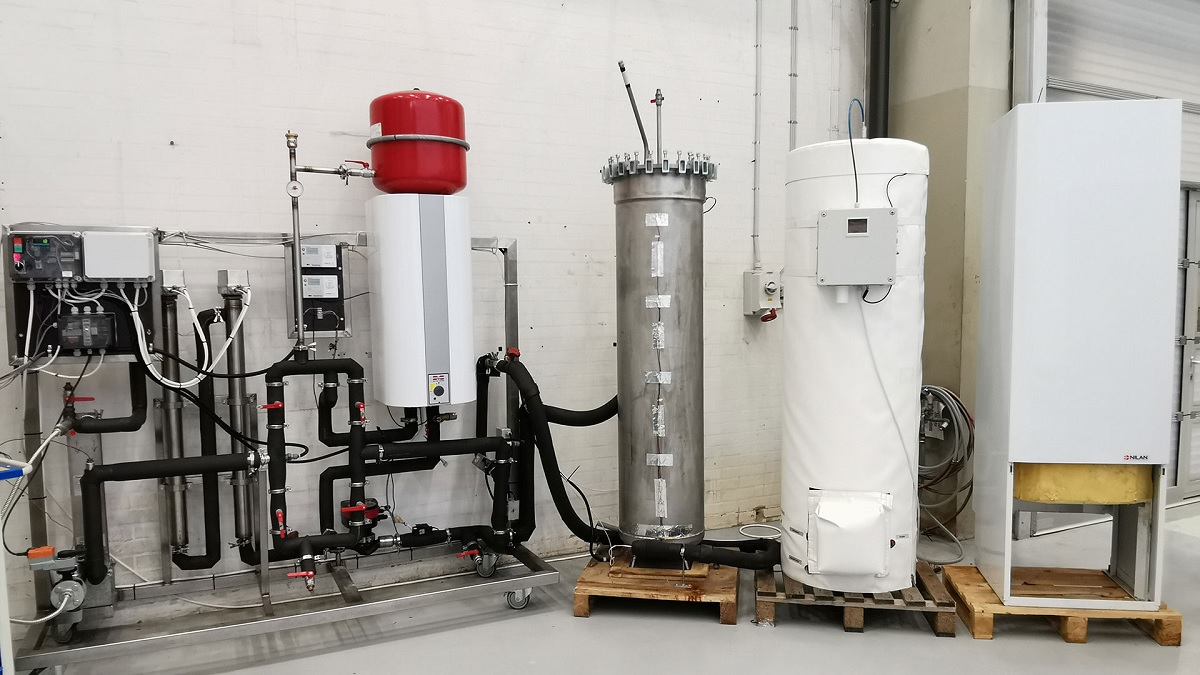
Solar thermal energy storage has been crucial in the development of renewable energy research in the university research institutions especially in the use of solar thermal energy storage in the context of concentrated solar power experiments, testing process heat research and heat management in laboratories. The choice of the correct technology will make the experiments reliable, cost-effective and educational. In the context of academic settings where budgets and available space are limited, evaluation has to be done carefully.
Learning the Principal Solar Thermal Energy Storage.
Solar thermal energy storage technologies are broadly categorized into 3; sensible heat storage, latent heat storage and thermochemical store.
- Sensible heat storage relies on raising or lowering the temperature of a material, such as water, molten salts, rocks, sand, or concrete. This approach is straightforward and widely used because materials are inexpensive and readily available.
- Latent heat storage uses phase change materials (PCMs), like salts or organics, that absorb or release large amounts of heat during melting or solidification, often at nearly constant temperatures. This offers higher energy density than sensible methods.
- Thermochemical storage involves reversible chemical reactions or sorption processes to store energy in chemical bonds, providing the highest potential density and minimal heat loss over long periods, though it remains largely experimental.
Each type suits different lab needs, from basic demonstrations to advanced high-temperature research.
Key Factors to Consider When Selecting a Technology
University labs must balance performance with practical limitations. Here are the primary considerations:
- Operating Temperature Range
Match the storage to your solar thermal setup. Low-temperature experiments (below 100°C) often work well with water-based sensible storage or organic PCMs. Medium-range (100–400°C) applications commonly use molten salts for sensible storage or salt hydrates for latent. High-temperature research (>400°C) may require solid particles or advanced PCMs. Always verify the material’s stability to avoid degradation during cycles.
- Energy Density and Storage Capacity
Labs often deal with small-scale setups, so higher density options like latent or thermochemical reduce space needs. Sensible storage requires larger volumes but provides ample capacity for extended testing.
- Cost and Availability
Budget constraints make low-cost materials attractive. Sensible options using rocks or sand are economical and easy to source. PCMs and thermochemical materials cost more but may justify investment for precise, high-density needs. Factor in setup, maintenance, and potential replacement expenses.
- Heat Transfer Performance and Efficiency
Efficient charging and discharging are crucial for repeatable experiments. Poor conductivity in some PCMs can slow processes considering enhancements like fins or composites. Sensible systems with fluids offer good transfer rates.
- Safety, Complexity, and Maturity
Prioritize non-toxic, non-corrosive materials in educational settings. Sensible heat storage is mature and simple to implement, minimizing risks. Latent systems need careful handling of phase changes, while thermochemical approaches involve reactions that demand expertise and safety protocols.
- Scalability and Research Goals
Start with modular designs for easy expansion or modification. If the focus is fundamental studies, sensible or latent studies may suffice. For cutting-edge work on long-duration storage, explore thermochemical prototypes.
Practical Recommendations for University Labs
For most introductory or mid-level projects, begin with sensible heat storage using water tanks or packed-bed rock/sand systems—they are affordable, forgiving, and allow hands-on learning about heat transfer.
When higher density is needed for compact setups or isothermal processes, latent heat with PCMs (e.g., paraffin or salt-based) provides excellent performance for solar heating/cooling simulations.
Reserve thermochemical for specialized graduate research, as it offers innovation potential but requires more resources.
Final Thoughts
In selecting the appropriate solar thermal energy storage technology within a university laboratory, one must make sure to match the capabilities of the system with your particular research project, available resources, and safety. Through assessing temperature requirements, density, cost and ease of use, the researchers are able to find solutions which can allow meaningful experiments within the confines of academia. Considerable selection is a way of not only developing the knowledge of sustainable energy but also providing students with skills to handle problems in renewable energy in the future.